


for ( I = 0; I < N; I++ )
    for ( J = I+1; J < N; J++ )
        if ( A[I] < A[J] )
            swap(A,I,J);
ここで, swap(A,I,J) は配列 A の第 I, J 要素
を入れ換える関数である.
def swap(A,I,J) {
    T = A[I]; A[I] = A[J]; A[J] = T;
}
for ( I = 0; I < N; I++ )
    for ( J = N-1; J > I; J-- )   /* A[I] が終点 */
        if ( A[J] > A[J-1] )
            swap(A,J,J-1);
 をとり A の要素を
  と
と  に
分け, それぞれに同じ操作を適用 (クイックソート).
に
分け, それぞれに同じ操作を適用 (クイックソート). (比較が
(比較が  回ある.)
クイックソートでは, いつも要素が半分になれば,
回ある.)
クイックソートでは, いつも要素が半分になれば,


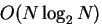 . しかし
最悪は である.
. しかし
最悪は である.
/* sort A[B]...A[E] in increasing order */

def qs(A,B,E) {
    if ( B >= E ) return; /* nothing to be done */
    M = idiv(B+E,2);
    Sep = A[M];  /* Sep : separator */
    swap(A,B,M); /* put the separator at the top of A */
    Last = B;
    /* A[B+1],...,A[Last] < Sep, A[Last+1],...,A[I-1] >= Sep */
    for ( I = B+1; I <= E; I++ )
        if ( A[I] < Sep ) {
            Last++;
            swap(A,I,Last);
        }
    /*restore the separator */
    swap(A,B,Last);
   /* recursion for the two parts */
    qs(A,B,Last-1);
    qs(A,Last+1,E);
}
再帰のたびに余分なメモリが必要になるが, リストを用いた次のような 分かりやすいプログラムも書ける.
def qs_list(L)
{
    if ( L == [] )
        return L;
    /* use the first element of L as a separator */
    /* it is somewhat dangerous (why?) */
    Sep = car(L);
    L = cdr(L);
    /* Left will be the set of elements less than or equal to Sep */
    /* Right will be the set of elements greater than Sep */
    Left = [];
    Right = [];
    for ( ; L != []; L = cdr(L) ) {
        T = car(L);
        if ( T <= Sep )
            Left = cons(T,Left);
        else
            Right = cons(T,Right);
    }
    /* recursion */
    Left = qs_list(Left);
    Right = qs_list(Right);
    /* Left + [Sep] + Right => sorted list */
    return append(Left,cons(Sep,Right));
}